In 2026, web accessibility is no longer optional – it is a core part of building successful digital products. As businesses expand online, ensuring that websites and applications are accessible to all users has become both a legal requirement and a competitive advantage.
WCAG in 2026: A Complete Guide to Web Accessibility Standards
- May 2, 2026
- Pavithra R
- 10:00 am
Views: 1,287
Introduction
In 2026, web accessibility is no longer optional – it is a core part of building successful digital products. As businesses expand online, ensuring that websites and applications are accessible to all users has become both a legal requirement and a competitive advantage.
Web accessibility ensures that people with visual, auditory, cognitive, and motor disabilities can access and interact with digital content effectively. Without accessibility, businesses risk excluding a large segment of users.
This is where WCAG (Web Content Accessibility Guidelines) plays a critical role. These globally recognized standards help organizations create inclusive, user-friendly, and SEO-optimized digital experiences.
What is WCAG?
WCAG (Web Content Accessibility Guidelines) is a set of international standards developed by the World Wide Web Consortium (W3C). These guidelines are designed to make web content more accessible to people with disabilities.
WCAG applies to:
- Websites
- Mobile applications
- Digital platforms
- Web-based tools
By following WCAG guidelines, businesses can ensure that their digital content is usable, understandable, and accessible to a wider audience.
Evolution of WCAG
Web accessibility standards have evolved over time:
- WCAG 1.0 – Basic accessibility rules
- WCAG 2.0 – Introduced structured success criteria
- WCAG 2.1 – Improved mobile and usability support
- WCAG 3.0 (2026) – Focus on real user experience and flexible scoring
In 2026, WCAG 3.0 marks a shift from technical compliance to a user-centered approach.
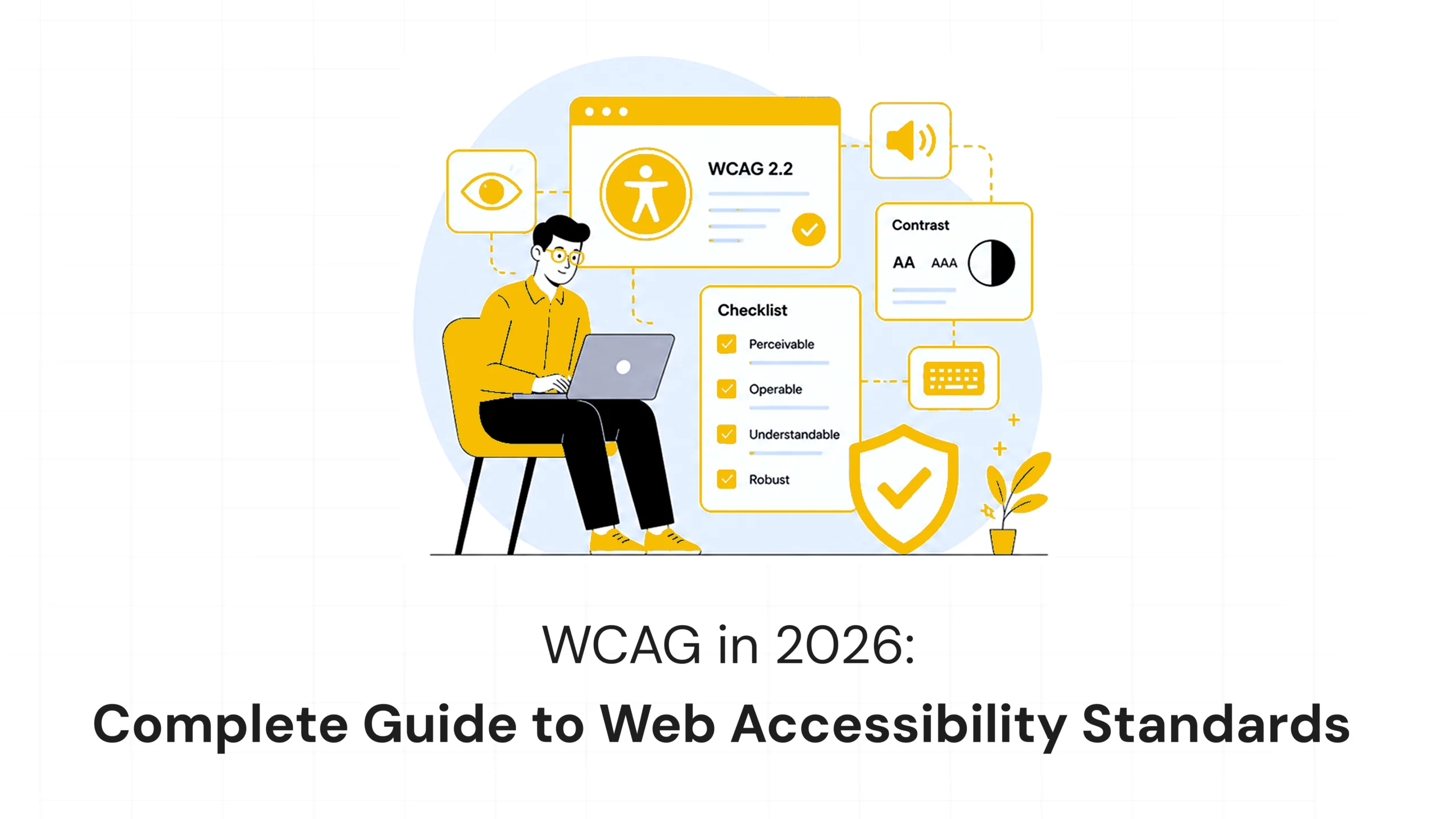
Core Principles of WCAG (POUR Model)
Perceivable
Content must be presented in ways users can perceive, such as providing alt text for images and captions for videos.
Operable
Users should be able to navigate and interact with the website easily, including through keyboard navigation.
Understandable
Content and interface should be simple, clear, and predictable.
Robust
Content should work across different devices, browsers, and assistive technologies.
What’s New in WCAG 3.0 (2026 Update)
WCAG 3.0 introduces several important improvements:
- Flexible scoring system instead of pass/fail
- Focus on real user experience
- Better support for mobile apps and modern interfaces
- Improved cognitive accessibility
- Continuous improvement approach
Advantages of WCAG Implementation
- Improved user experience for all users
- Wider audience reach
- Legal compliance and reduced risk
- Better SEO performance
- Strong brand reputation
- Future-ready digital strategy
Disadvantages / Challenges of WCAG
- Initial implementation cost
- Requires continuous updates
- Complexity in understanding WCAG 3.0
- Design limitations in some cases
- Need for team training
Why WCAG Matters for Businesses in 2026
- Increasing legal requirements
- Growing demand for inclusive design
- Better user engagement
- Competitive advantage
- Improved conversions and retention
Accessibility is no longer just a compliance requirement — it is a business strategy.
How to Prepare for WCAG 3.0
- Conduct accessibility audit
- Use testing tools like WAVE, Axe, Lighthouse
- Improve color contrast
- Add alt text for images
- Enable keyboard navigation
- Train design and development teams
- Test with real users
Accessibility Testing Tools
- WAVE
- Axe DevTools
- Google Lighthouse
- Screen readers (NVDA, VoiceOver)
Common Accessibility Mistakes
- Missing alt text
- Poor color contrast
- Complex navigation
- No keyboard support
- Missing video captions
- Improper heading structure
Conclusion
As digital experiences evolve, accessibility has become a critical part of modern web design and development. WCAG in 2026 reflects a shift toward more inclusive, user-focused standards.
Businesses that adopt WCAG guidelines early will not only stay compliant but also improve user experience, expand their audience, and strengthen their digital presence.
Accessibility is not just a guideline — it is the foundation of a better digital future.
Latest Blogs
Work With Us to Create Impactful Digital Experiences
WCAG 2026 FAQs
What is WCAG?
WCAG is a set of guidelines that ensure websites are accessible to people with disabilities.
What is WCAG 3.0?
WCAG 3.0 is the latest version focusing on user experience and flexible accessibility scoring.
Why is WCAG important in 2026?
It helps businesses meet legal requirements, improve user experience, and boost SEO.
Is WCAG mandatory?
It depends on regulations, but many laws are based on WCAG standards.
Does WCAG improve SEO?
Yes, accessibility improves website structure and search engine ranking.
How can I make my website accessible?
By adding alt text, improving contrast, enabling keyboard navigation, and following WCAG guidelines.