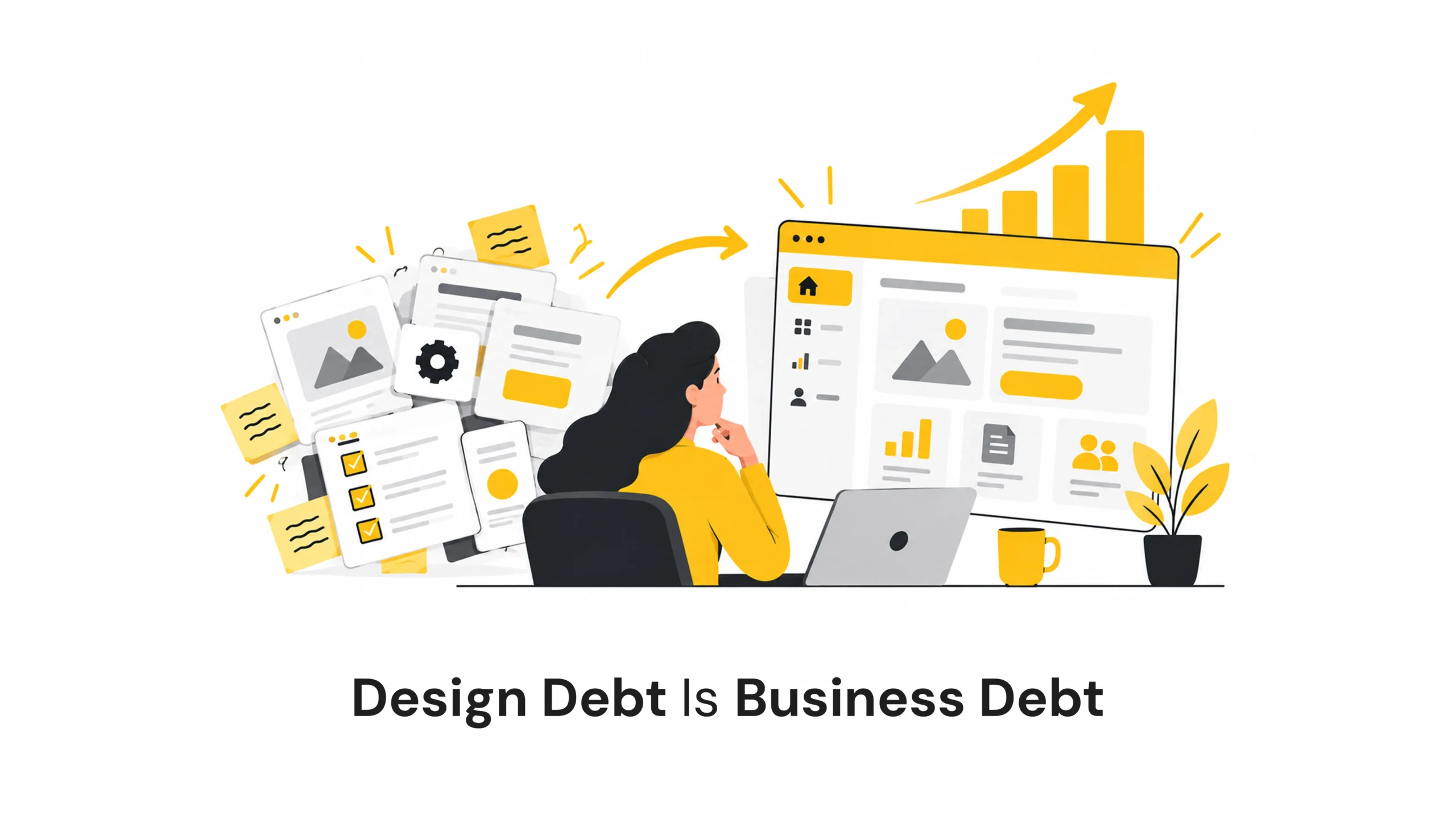
AI is changing how quickly interfaces can be created.
With a simple prompt, AI tools can now generate layouts, components, dashboards and even complete interface concepts in seconds. What once took hours of design work can sometimes be explored in a few minutes.
But creating a UI is not the same as designing an experience.
Design Debt Is Business Debt
- September 29, 2026
- Pavithra R
- 10:00 am
Views: 138
We talk a lot about technical debt. But there’s another kind of debt that quietly builds up inside products: design debt.
It starts with small decisions.
A button gets designed differently because a feature needs to launch quickly. An old screen doesn’t get updated because it still works. A new designer creates a slightly different version of an existing component.
None of these decisions seems like a big problem at the time.
But months or years later, they start adding up. The product becomes harder to use, designers spend more time figuring out which patterns to follow, and developers end up building different versions of the same thing.
That’s design debt. And over time, it becomes a business problem.
What Exactly Is Design Debt?
Design debt is the collection of small UX and UI decisions that were never revisited as a product evolved.
It can show up in different ways: buttons that perform the same action but look different, inconsistent terminology, outdated screens sitting alongside newer ones, or multiple ways to complete the same task.
Individually, these inconsistencies may seem harmless. The problem starts when they accumulate across the product.
Design debt rarely happens all at once. It builds up quietly, one small decision at a time.
How Does Design Debt Happen?
Most products don’t become inconsistent intentionally. They grow.
New features are added, teams expand, deadlines get tighter, and different designers work on different parts of the product.
One team creates a new component for a particular feature. Months later, another team builds something similar but approaches it differently. Meanwhile, older screens remain unchanged as newer features adopt updated design patterns.
Over time, the product starts speaking in different design languages.
Design debt often isn’t the result of one bad decision. It’s the result of many decisions that were never revisited.
When Small Inconsistencies Become Big Problems
One inconsistent button isn’t going to break a product. But when similar inconsistencies appear across hundreds of screens, their impact becomes harder to ignore.
Designers spend more time deciding which patterns to use. Developers need additional clarification. QA teams have more variations to test, and users encounter different behaviours in different parts of the same product.
These problems can lead to increased design and development time, additional testing, more support requests and slower feature delivery.
What initially looked like a small design issue eventually affects the entire product development process.
The real cost isn’t the inconsistency itself. It’s everything that happens because of it.
How Do You Know If Your Product Has Design Debt?
Design debt isn’t always immediately visible. Sometimes, the easiest way to identify it is to look at how your team works and how users interact with your product.
Are similar problems being solved in different ways?
Do related screens behave differently?
Are designers repeatedly recreating existing components?
Do developers frequently need clarification about interactions?
Are there outdated screens everyone knows need attention, but nobody has the time to update them?
If these situations sound familiar, your product may have accumulated design debt.
Recognising these patterns early makes it easier to address them before they become more expensive to fix.
Design Debt Doesn’t Always Mean a Redesign
Identifying design debt doesn’t mean you need to redesign your entire product.
In many cases, small and consistent improvements are more practical than a complete overhaul.
Audit → Identify inconsistent patterns, outdated screens and duplicate components.
Prioritise → Focus on issues that have the greatest impact on users and business goals.
Clean Up → Remove unnecessary variations and improve outdated experiences.
Standardise → Establish reusable components and consistent interaction patterns.
Maintain → Make regular design reviews part of the product development process.
The goal isn’t to fix everything at once. It’s to prevent small problems from continuing to grow.
Why Design Systems Matter
A design system is more than a collection of colours, typography and UI components. It provides a shared foundation for how a product looks, feels and behaves.
With established design patterns, teams don’t need to solve the same problems repeatedly.
Designers can reuse existing components, developers have clearer implementation guidelines, and users experience more consistent interactions.
However, a design system also needs regular maintenance. As products evolve, components and guidelines should evolve with them.
A design system that isn’t maintained can eventually become another source of design debt.
Good Design Needs Ongoing Maintenance
Products are constantly evolving. New features are introduced, user expectations change, and business requirements shift.
Design needs to evolve alongside them.
The goal isn’t to make every screen perfect forever. It’s to make sure small design decisions don’t accumulate until the product becomes difficult to use, develop and maintain.
A product rarely becomes complicated because of one big design mistake. It becomes complicated through hundreds of small decisions that were never revisited.
Good design isn’t just about creating something new. It’s also about taking care of what already exists.
And that’s why design debt isn’t just a design problem.
It’s business debt.
Latest Blogs
Work With Us to Create Impactful Digital Experiences
FAQs
What is design debt?
Design debt is the collection of outdated, inconsistent or inefficient UX and UI decisions that accumulate as a product grows. Over time, it can make a product harder to use, design, develop and maintain.
How does design debt affect a business?
Design debt can increase design and development effort, create more QA work, slow down feature development and make the product more difficult for users to understand. These issues can eventually increase the overall cost of maintaining the product.
Does design debt mean a product needs a complete redesign?
Not always. Design debt can often be addressed through regular audits, prioritised improvements, component standardisation and design system maintenance. A complete redesign may not be necessary.
How can a design system help reduce design debt?
A well-maintained design system provides reusable components, consistent patterns and clear guidelines for designers and developers. This reduces unnecessary variations and helps teams create a more consistent product experience.